The opal guide
Know your stone
What opal is, why our signature stone is light, where Australian opal comes from, and how to care for it.
Opal, plainly
Silica, water and time.
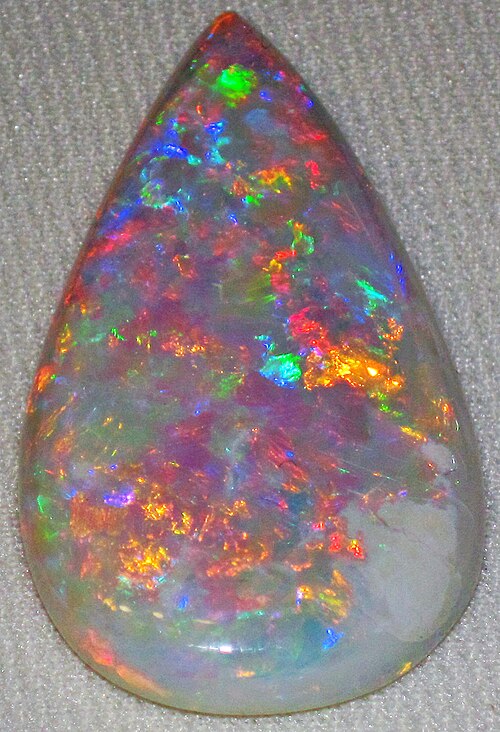
Opal is silica and water, set hard over millions of years. Its play of colour comes from tiny spheres of silica that split light into colours as the stone moves. No two stones are the same.
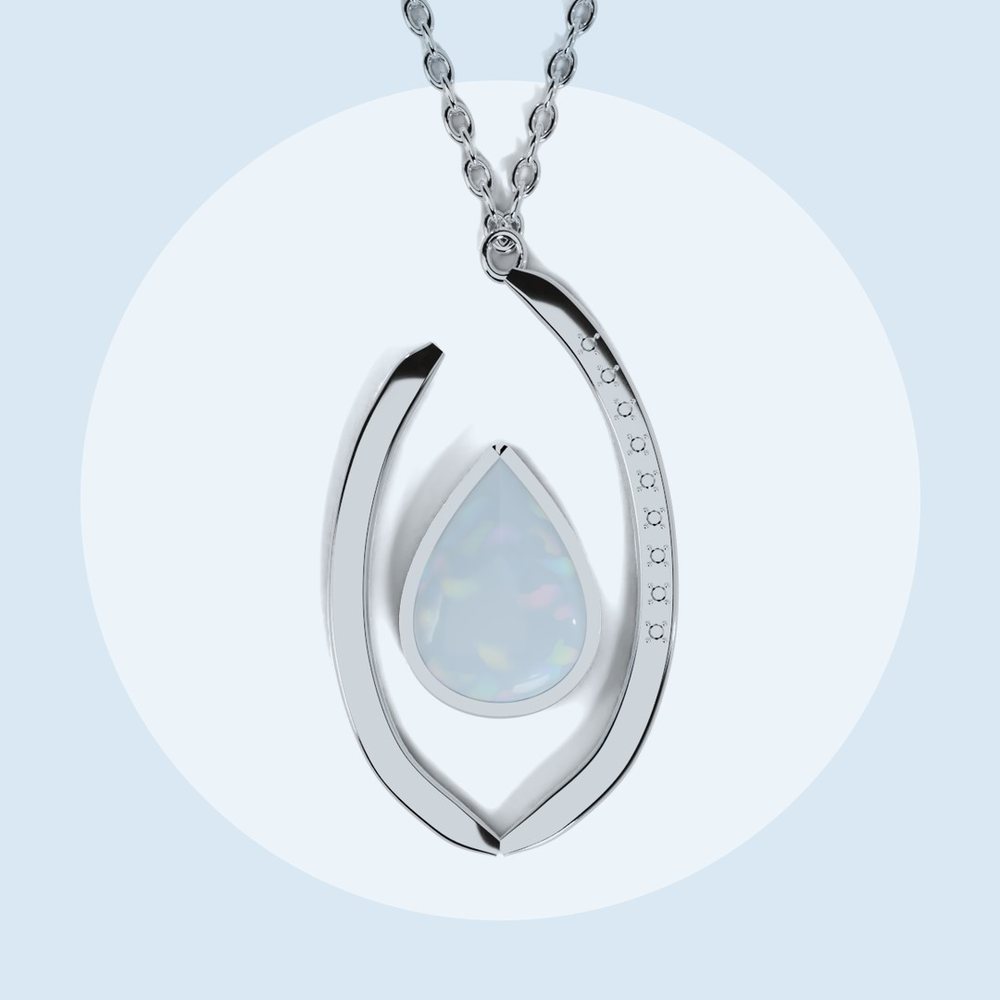
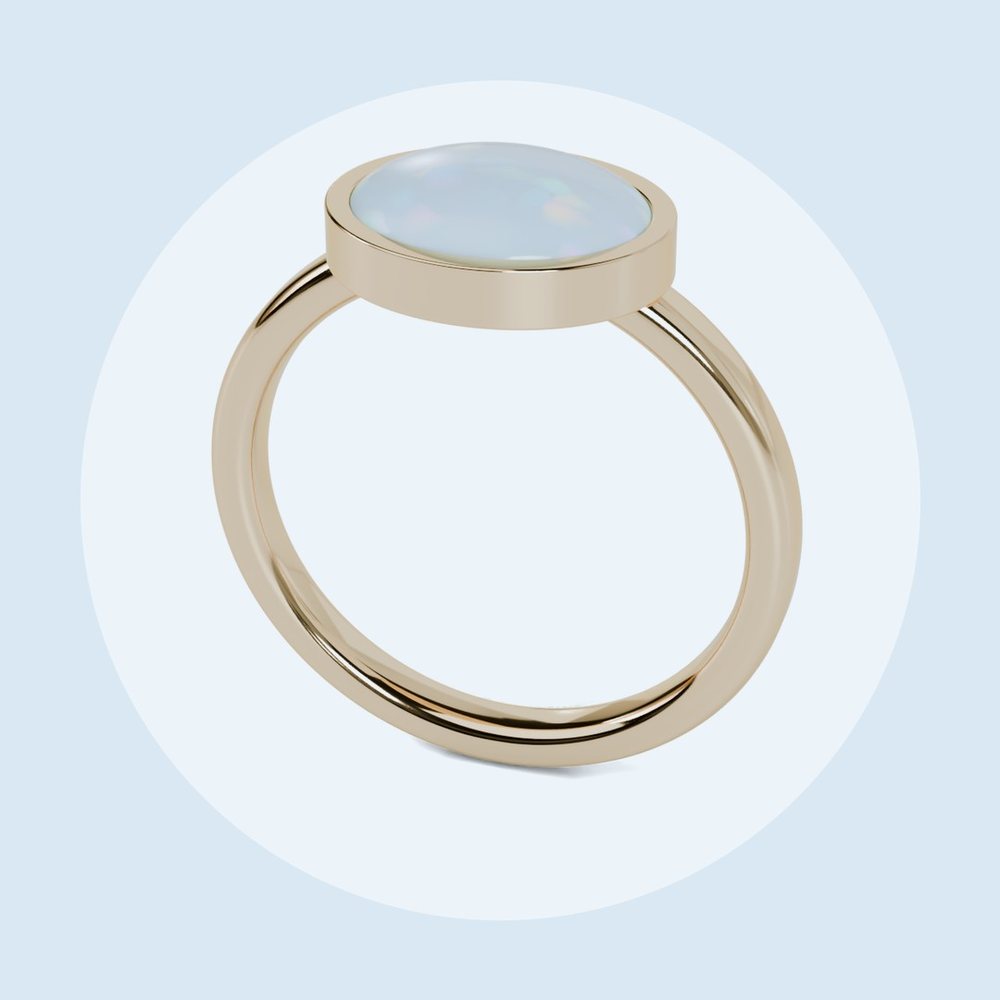
Our first pieces are set with Australian opal doublets in a light body tone. Every piece comes with a stone card that states the opal type, the field, the size, the weight and any treatment.
Solid, doublet or triplet?
All three contain real opal, but they are not worth the same and they are not cared for in the same way. That is why the type is stated on every stone card.
Solid opal
One piece of opal, cut and polished. Nothing added.
Doublet
A thin slice of natural opal joined to a backing, usually dark. The backing deepens the colour. It must never be soaked, because water can loosen the layers.
Triplet
A doublet with a clear cap on top, to protect a very thin slice of opal.
From black to light
Body tone is graded from N1, which is black, to N9, which is white. Our signature opal sits at the light end. Each stone is judged face up, in daylight.
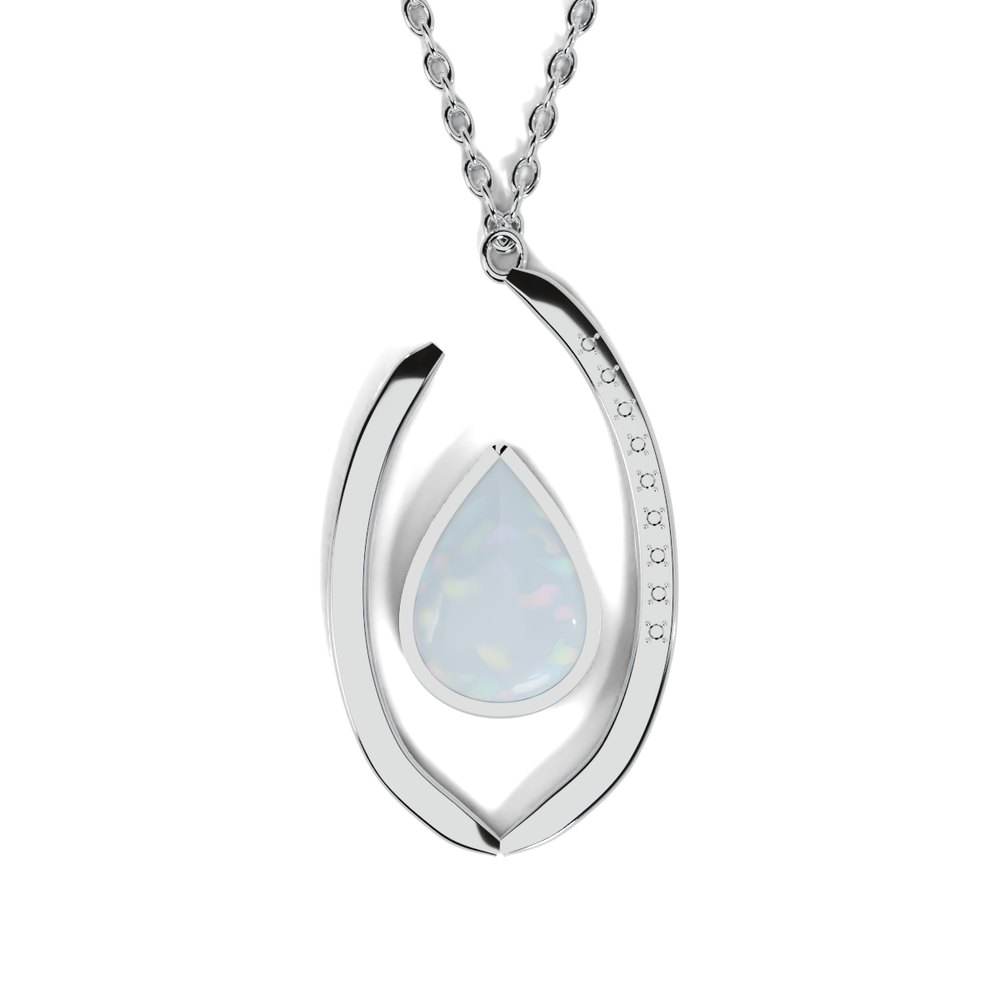
Light opal
Our signature. Pale blue, with a soft play of colour.
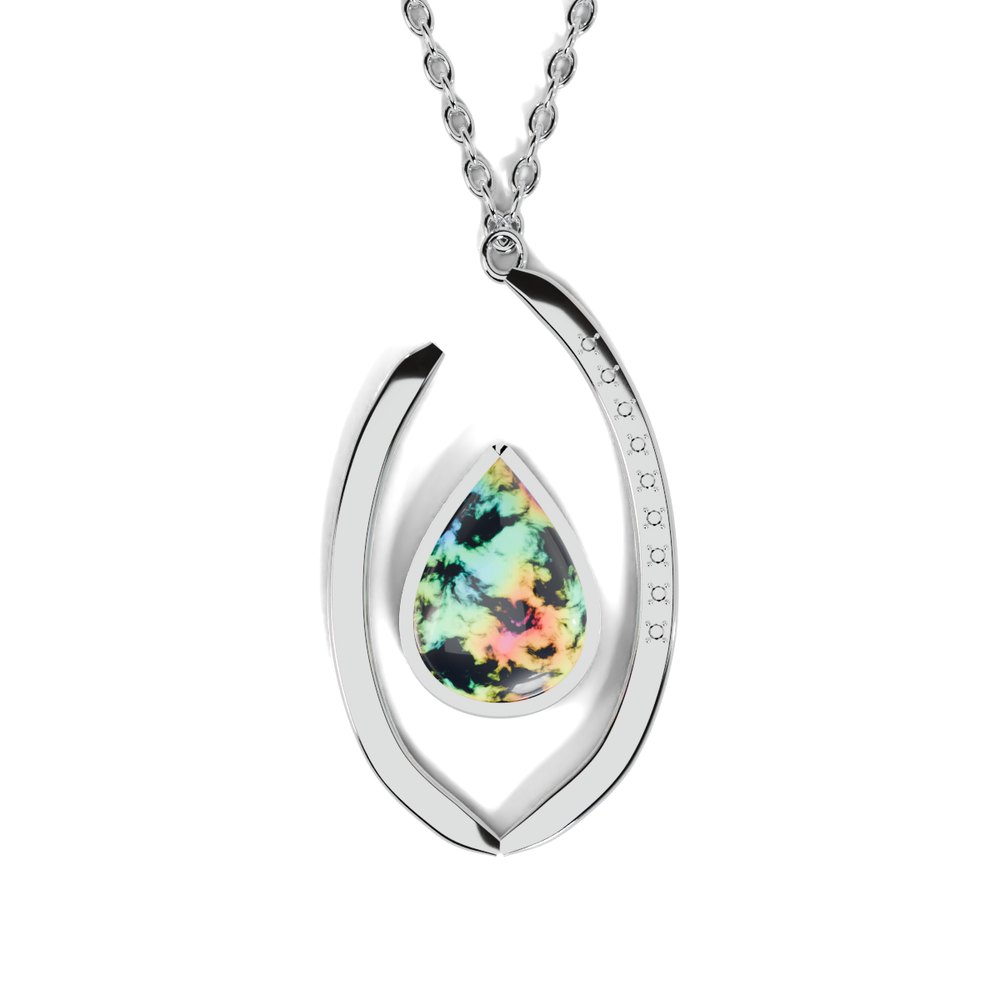
Black opal
Body tone N1 to N4. Found above all at Lightning Ridge.
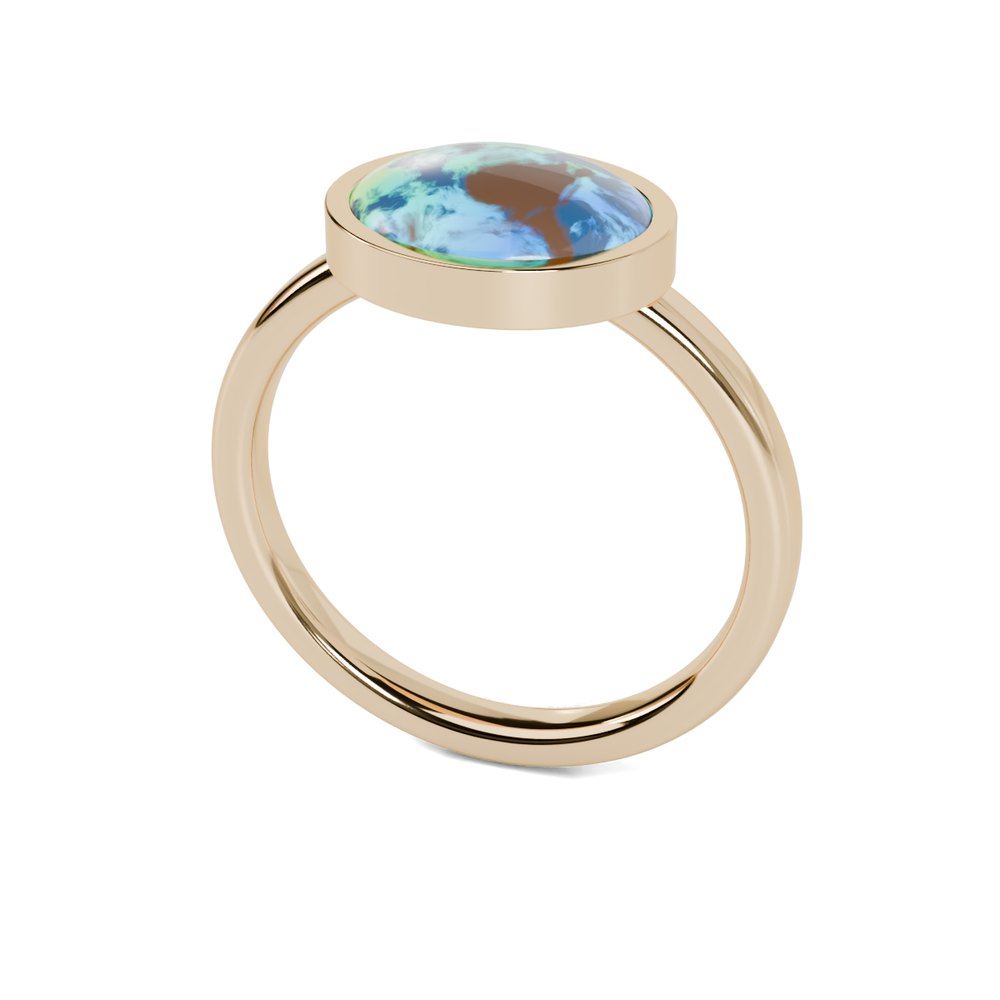
Boulder opal
Opal still joined to its ironstone. Found in Queensland.
Design renders, to show the colours. Real stones vary, and every stone is photographed before it is offered.
Where Australian opal comes from
Almost all of the world's precious opal is mined in three Australian states.
New South Wales
Known for black opal.
Lightning Ridge, White Cliffs
South Australia
Known for white, light and crystal opal.
Coober Pedy, Andamooka, Mintabie
Queensland
Known for boulder opal.
Winton, Quilpie, Yowah
Looking after opal
Three things to know. They matter most for a doublet.
Keep it dry
Take it off before swimming, showers and spas. Never soak opal, and never soak a doublet or triplet.
Keep it cool
Heat and sudden changes in temperature can crack opal. No ultrasonic or steam cleaners.
Wipe, then store
Wipe it with a soft cloth and keep it in its box, away from harder stones.